

Can ChatGPT Replace Software Outsourcing?
Contents
ChatGPT has been making waves in the field of natural language processing. OpenAI’s conversational chatbot has immense potential as a disruptive technology, with some predicting it usurping Google as the premier search engine in the near future. It has already become a popular tool for businesses to save time and money doing written language tasks.
Among ChatGPT’s many capabilities lies one that really spoke to us: the ability to return code from normally-worded English prompts. This allows people with a non-technical background to create software without even touching a line of code – something software outsourcing companies have been doing for years.
This raises the question: can Software Outsourcing as an industry be replaced completely with ChatGPT in the near future?
ChatGPT3’s capabilities
First, ChatGPT’s strengths. ChatGPT is a language model trained on a massive amount of data and, as a result, can generate human-like responses to a wide range of questions and prompts. This makes it an ideal tool for automating customer support and other tasks that involve written language.
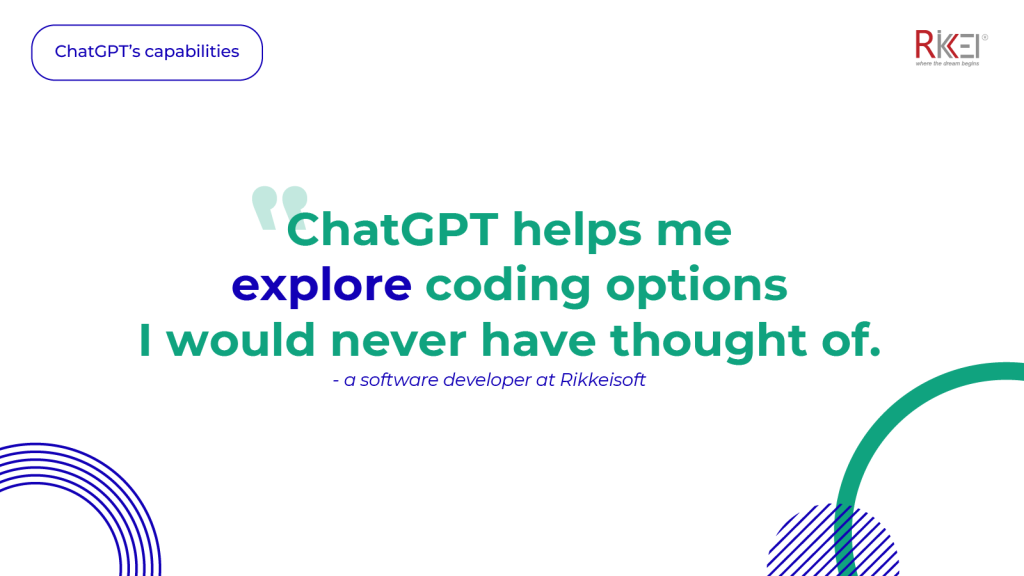
As Rikkeisoft’s software developers experimented with ChatGPT, they found that it is a powerful companion for their job thanks to its ability to:
- Create code suggestions: ChatGPT can suggest how to code next based on the developer’s input, saving them time and effort.
- Assist in bug detection: ChatGPT can assist in finding and squashing bugs in the developer’s code.
- Assist in research: Developers can quickly ask ChatGPT to define and explain anything they encounter while working, be it new terms, libraries, functions, or whatever you can think of.
- Evaluate code: Developers can run their code through ChatGPT for feedback on how to make it more efficient, easier to read, etc.
Many startups have chosen to use ChatGPT alongside other generative AIs as assistants, choosing to preemptively freeze hiring altogether, as reported by Sifted. This decision is not without reason: in the same article, a startup founder develops everything himself with ChatGPT as a personal coding assistant.
ChatGPT’s limitations
As impressive as it is, it’s important to remember that ChatGPT is still a machine and can’t think critically or creatively as a human would. Due to this alone, it cannot replace humans in an environment that requires heavily on personal experience and creative thinking like software development.
Furthermore, ChatGPT’s programming abilities are also very limited. As written above, the most it can do for developers are suggestions, assistance, and code polishing, due to many limitations of the chatbot:
- It cannot write complete programs, requiring a developer to write and finish the code.
- It cannot find and squash every bug in the code due to the lack of an execution and test environment.
- Its ability to directly interact with code environments like Integrated Development Environments and terminals is nonexistent.
- It cannot give detailed information about implementation, only advice and suggestions.
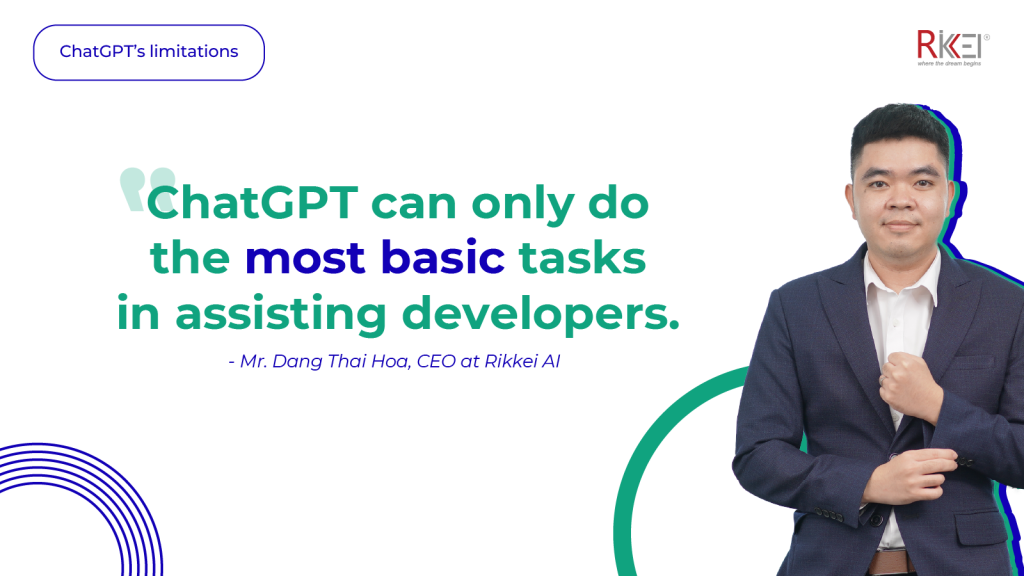
Mr. Dang Thai Hoa, CEO of Rikkei AI (Rikkeisoft’s subsidiary for AI research and development), noted that in its current state, ChatGPT could only help developers at the most basic level. Until OpenAI develops the chatbot further and/or releases a version specializing in software development, developers will not lose their place in the job market, Mr. Hoa stressed.
Another argument against ChatGPT replacing software outsourcing is the flexibility factor. IT Outsourcing solutions can be tailored to the specific needs of a business and can be scaled up or down as needed. This means businesses can work with IT outsourcing companies to create solutions tailored to their unique needs and can grow and change as their business evolves.
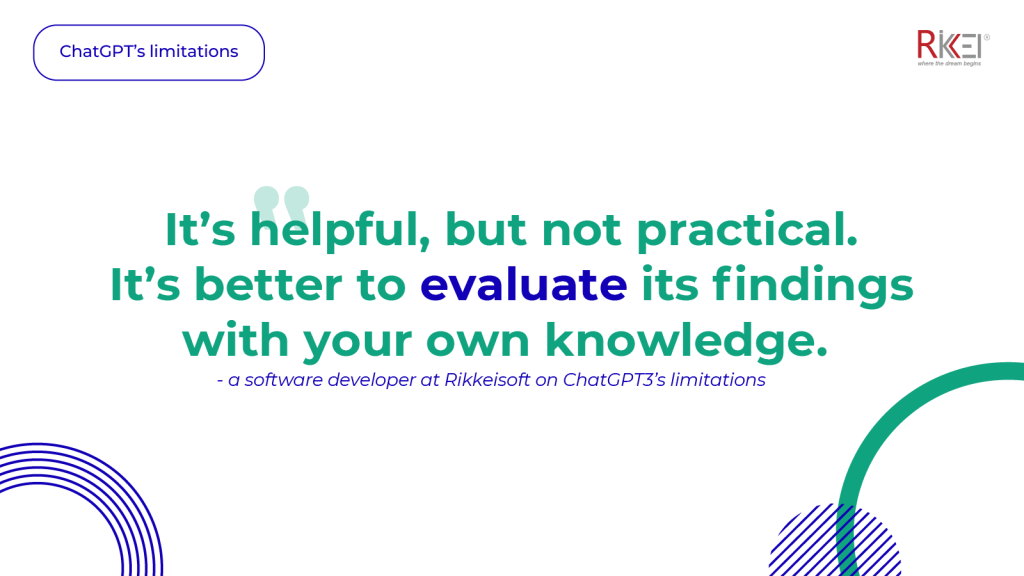
ChatGPT’s credibility is also a point of discussion between developers. As it was trained with a huge database of available information on the internet, it is unavoidable that false information was fed to the chatbot, generating wrong answers to users’ questions. Because of this, the users must be knowledgeable enough to do their research and compare it with ChatGPT’s answers for the best results.
Conclusion
While ChatGPT is a powerful tool, it can’t replace IT Outsourcing companies in the near future. IT Outsourcing companies have the expertise and experience needed to create custom software solutions for businesses that are much more flexible and scalable than ChatGPT. At Rikkeisoft, developers are constantly researching how the chatbot can improve their efficiency in software development rather than worrying about being replaced.
If you are thinking of creating highly customizable software for you and/or your business, IT outsourcing should still be a major contender for your consideration.

More From Newsroom
July 17, 2026
Rikkei Danang 10 Years Growing Forward
Rikkeisoft Danang successfully hosted the “RIKKEI DANANG 10 YEARS GROWING FORWARD” event series to celebrate its 10th anniversary. Gathering numerous clients, strategic partners, and employees, the event marked a key milestone in Rikkeisoft’s expansion strategy in Central Vietnam. A Proud 10-Year Journey of Growth Recognizing the region’s IT potential, Rikkeisoft officially established its Danang branch […]
July 9, 2026
Rikkeisoft Is Now a Select Partner in the Claude Partner Network, Services Track
Artificial Intelligence is moving beyond experimentation into enterprise-wide adoption. As organizations increasingly look for practical AI applications that deliver measurable business value, the ability to implement AI effectively has become just as important as access to the technology itself. Reflecting this shift, Rikkeisoft has officially been recognized as a Select Partner in the Claude Partner […]
May 27, 2026
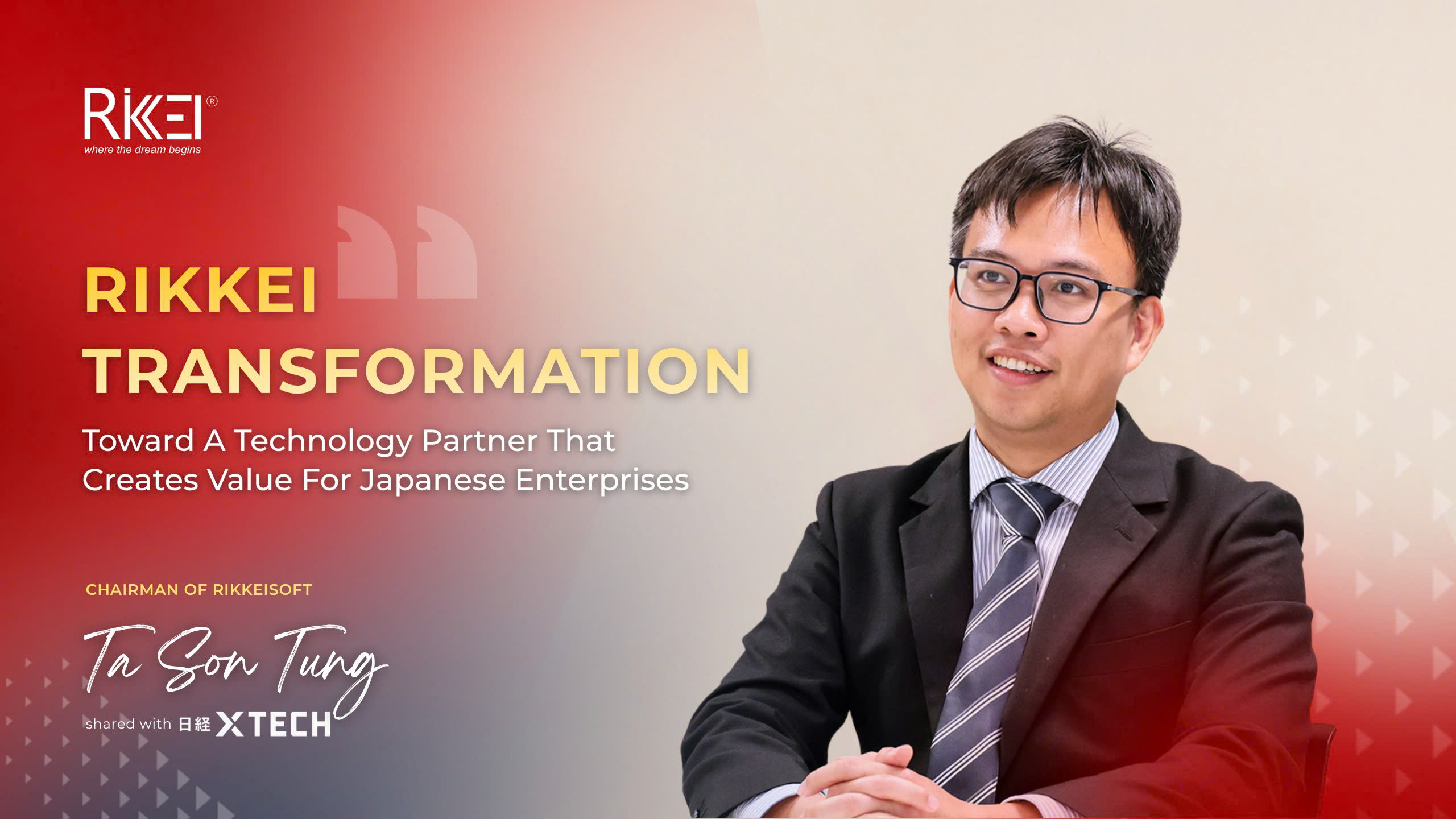
Rikkei Transformation: Toward A Technology Partner That Creates Value For Japanese Enterprises
Learn more about Chairman Ta Son Tung’s insights in Nikkei xTech Special (JPN only): Read the article here For years, technology partnerships were often measured by scale, speed, and cost efficiency. Today, expectations are shifting. Across markets such as Europe and Japan, enterprises are looking for partners who can go beyond delivery: Understanding business priorities […]
May 20, 2026
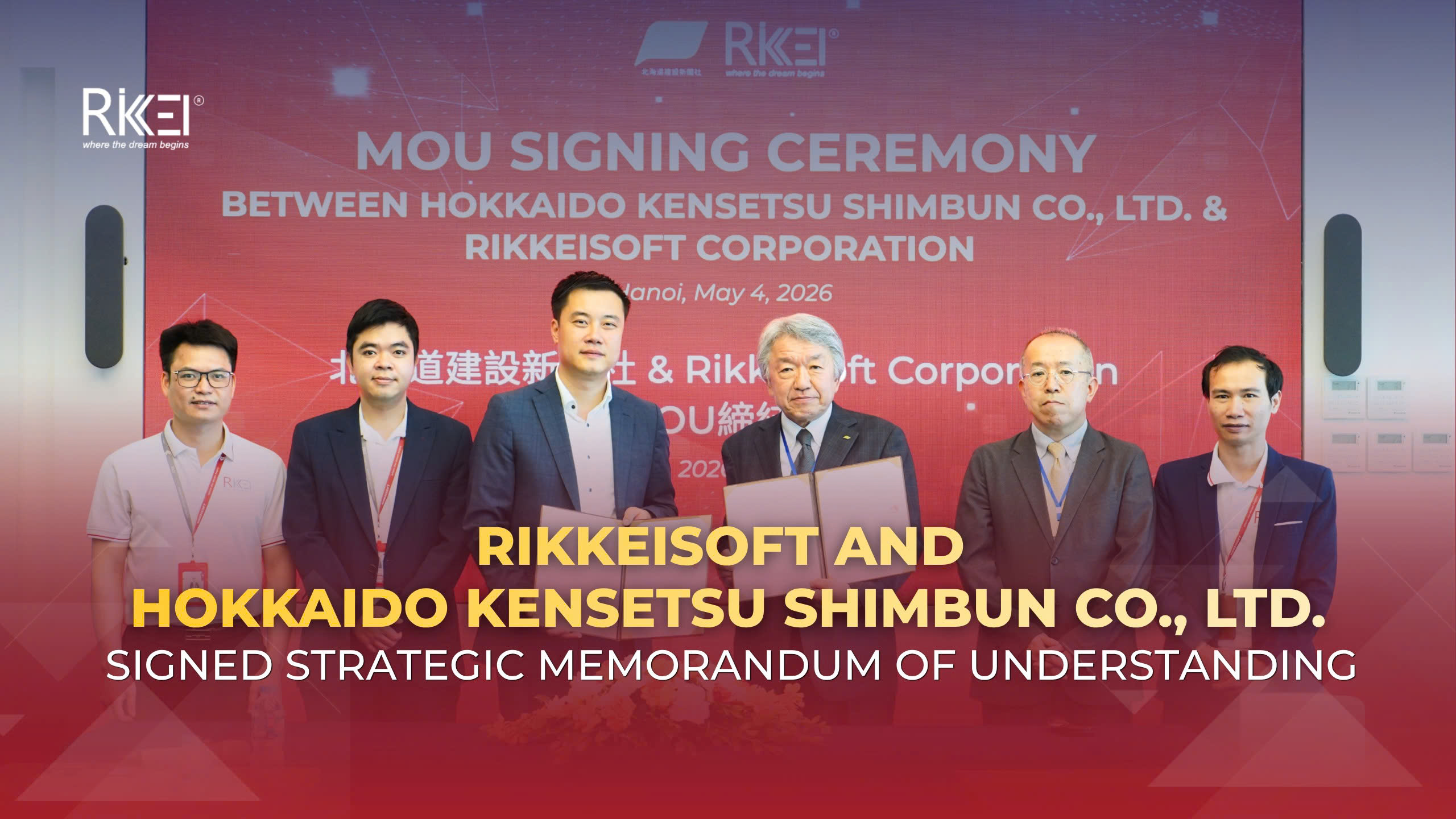
Rikkeisoft and Hokkaido Kensetsu Shimbun Co., Ltd. Signed Strategic MOU
On May 4, 2026, Rikkeisoft officially signed a Memorandum of Understanding (MOU) for strategic cooperation with Hokkaido Kensetsu Shimbun Co., Ltd. (北海道建設新聞社), marking the beginning of a new partnership between the two companies. The signing ceremony took place at Rikkeisoft’s headquarters in Hanoi, Vietnam, with the aim of strengthening business development and expanding cooperation opportunities […]
May 19, 2026
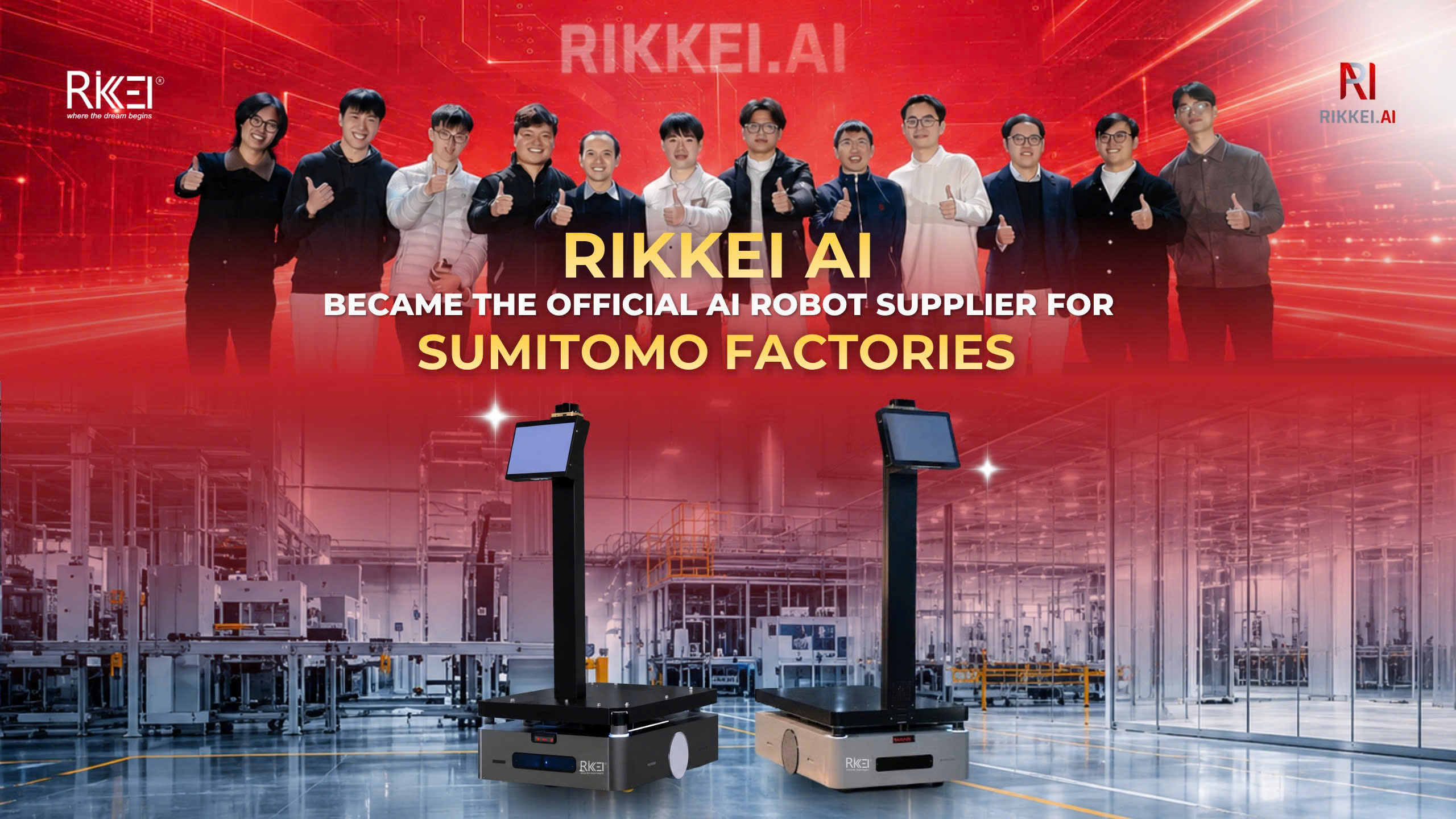
Rikkei AI Becomes AMR Robotics Partner for Sumitomo, Marking a Strategic Step in Industrial Automation
Rikkei AI has marked an important milestone by directly providing AI-powered AMR robots to a manufacturing site of Sumitomo, one of Japan’s leading industrial groups with a global network of operations. This milestone represents more than a commercial project. It reflects Rikkei AI’s growing capability to bring robotics products developed by its engineering team into […]
April 20, 2026
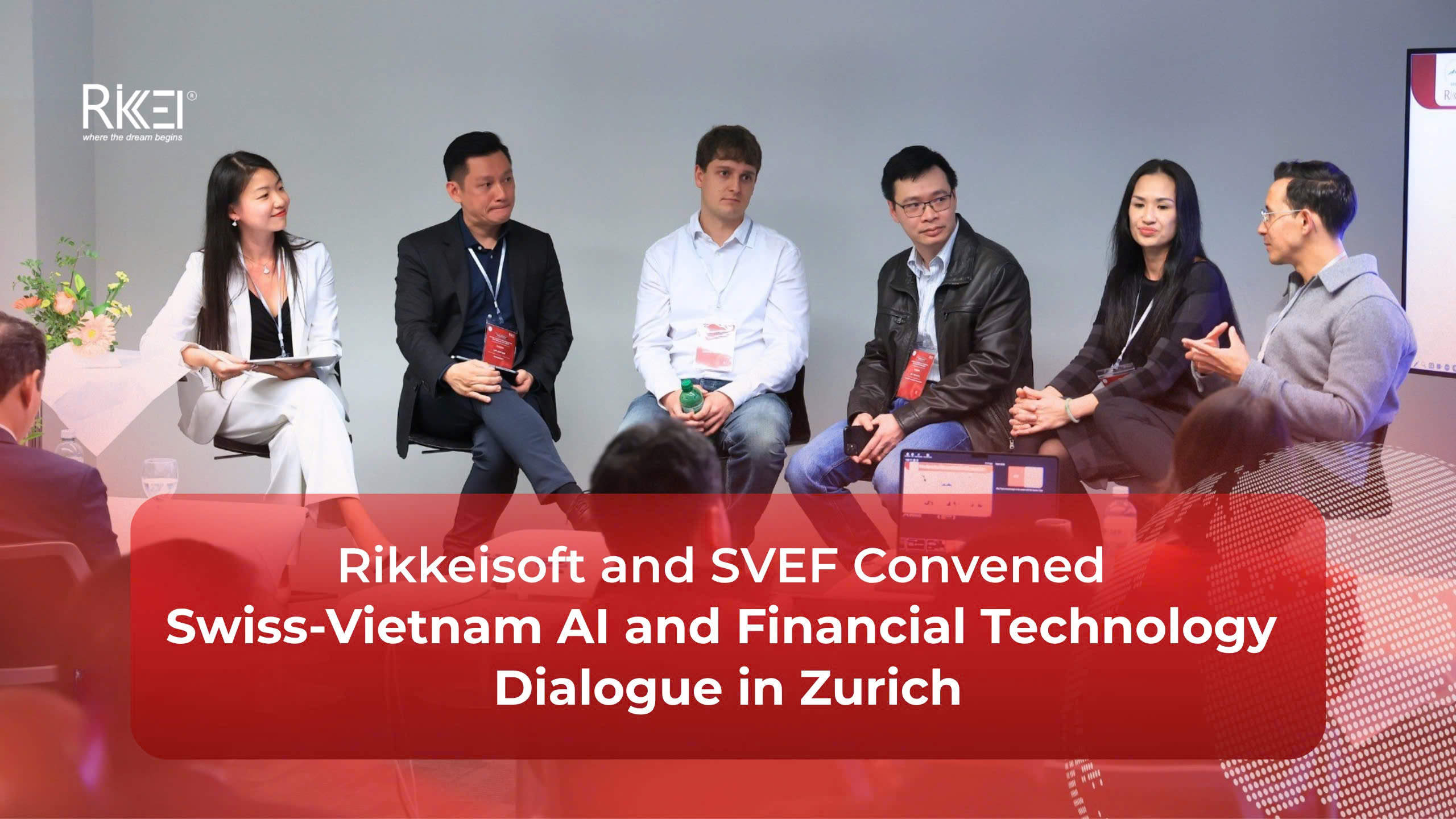
Rikkeisoft and SVEF Convened Swiss-Vietnam AI and Financial Technology Dialogue in Zurich
As AI adoption in financial services moves beyond experimentation, institutions are increasingly focused on how to scale AI in ways that are compliant, reliable, and operationally effective. Meeting that challenge requires more than strong models. It depends on trusted infrastructure, governance, and disciplined implementation. Against this backdrop, Rikkeisoft and the Swiss-Viet Economic Forum (SVEF) brought […]