







An order cannot be processed. A shipment is delayed. Employees lose access to essential applications. Customers wait for updates.
These are business consequences that can follow a cybersecurity incident. When critical systems become unavailable, the disruption can extend beyond the IT department into daily operations, customer service and supply chains.
Today’s cyber threats can be sophisticated and fast-moving, with consequences for critical business operations. For enterprise leaders, cybersecurity therefore belongs within a broader conversation about business continuity, risk management and organisational resilience.
Connected systems create shared dependencies
Modern enterprises rely on core business applications, cloud infrastructure, digital platforms and connections with suppliers and customers.
These systems help organisations coordinate work and deliver services. They also create dependencies: one business process may rely on several applications, shared data sources and external providers.
For example, processing an order might require access to customer records, inventory information, payment systems and logistics platforms. If an essential component becomes unavailable, other parts of the workflow may be affected.
Understanding these connections helps organisations identify where a system disruption could become a business interruption.
How cyber incidents affect business continuity
The consequences of an incident depend on the systems involved, the organisation’s operations and its ability to respond. Potential impacts include:
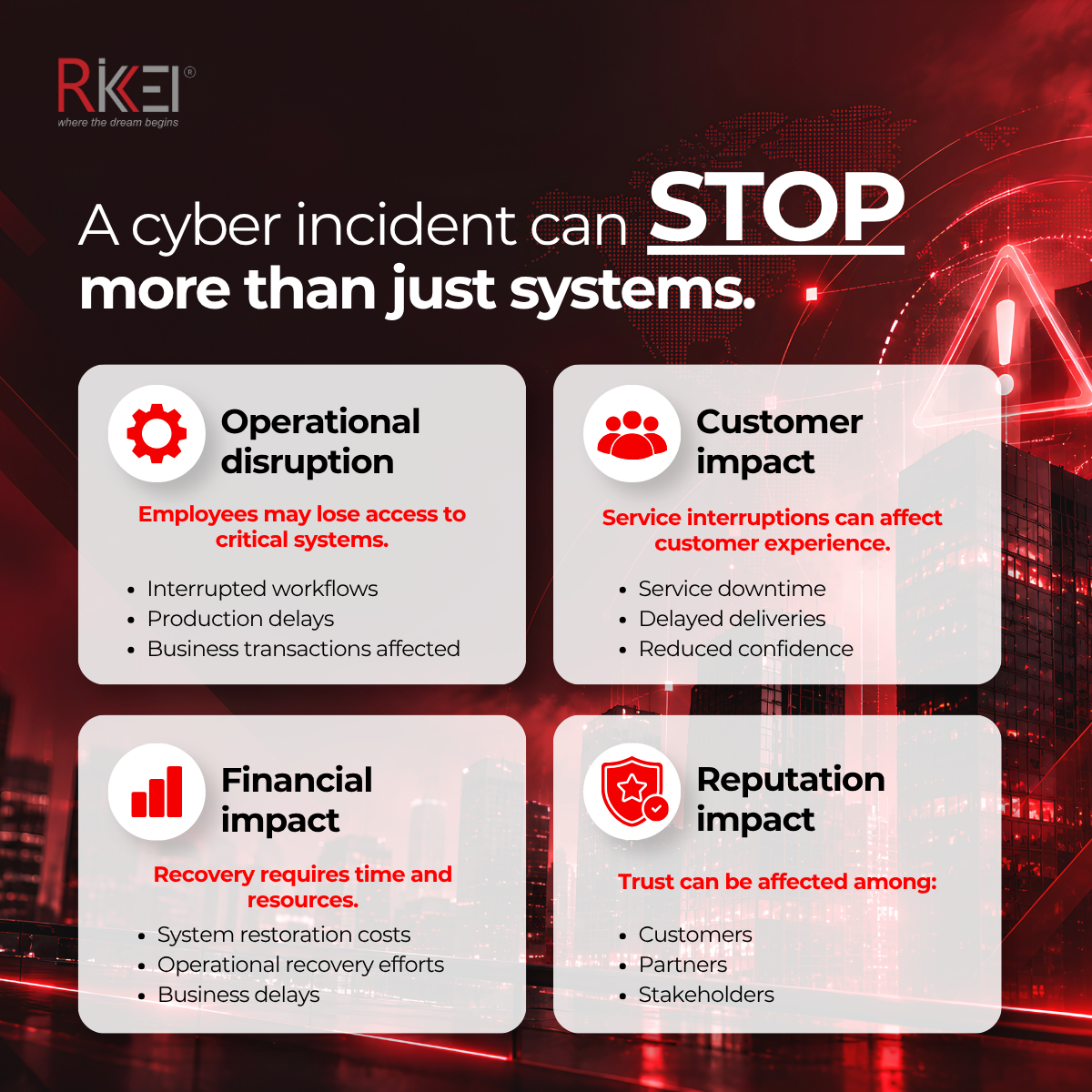
Operational disruption. Employees may lose access to critical applications or data, interrupting workflows, production schedules and business transactions.
Customer impact. Service downtime and delayed deliveries can affect customer experience. Inconsistent communication during recovery may create further uncertainty.
Financial impact. Investigation, system restoration and operational recovery require resources. Interrupted business activity can also create additional costs or lost revenue.
Reputational impact. An incident can affect confidence among customers, partners and other stakeholders, particularly when services or sensitive information are involved.
These consequences make enterprise cybersecurity relevant to business leaders, operations teams and technology stakeholders alike.
What the 2025 ransomware figures show
Comparitech’s Worldwide Ransomware Roundup 2025 recorded 7,419 ransomware attacks globally, a 32% increase compared with its 2024 total.
Of those entries, 1,173 were confirmed by the targeted organisations. The remaining entries were claims made by ransomware groups that the targets had not acknowledged.
Manufacturing recorded 1,466 attacks, up 56% from 2024.
Manufacturers not only saw a 56 percent increase in attacks (rising from 937 to 1,466) but the average ransom demand more than doubled from $523,000 in 2024 to nearly $1.2 million in 2025.
These figures describe Comparitech’s tracked dataset, rather than a complete count of every ransomware attack worldwide. Unreported incidents and delays in disclosure also affect the available picture.
For businesses, the findings provide context for reviewing exposure and operational dependencies. They do not predict an individual organisation’s likelihood of experiencing an attack.
Source: Comparitech — Worldwide Ransomware Roundup: 2025 End-of-Year Report, recorded totals include confirmed attacks and unverified ransomware-group claims.
Building cyber resilience before disruption happens
Cyber resilience involves preparing for incidents, responding effectively and restoring essential services. Prevention and detection remain important, alongside response and recovery capabilities.
Enterprises can begin with three practical priorities.
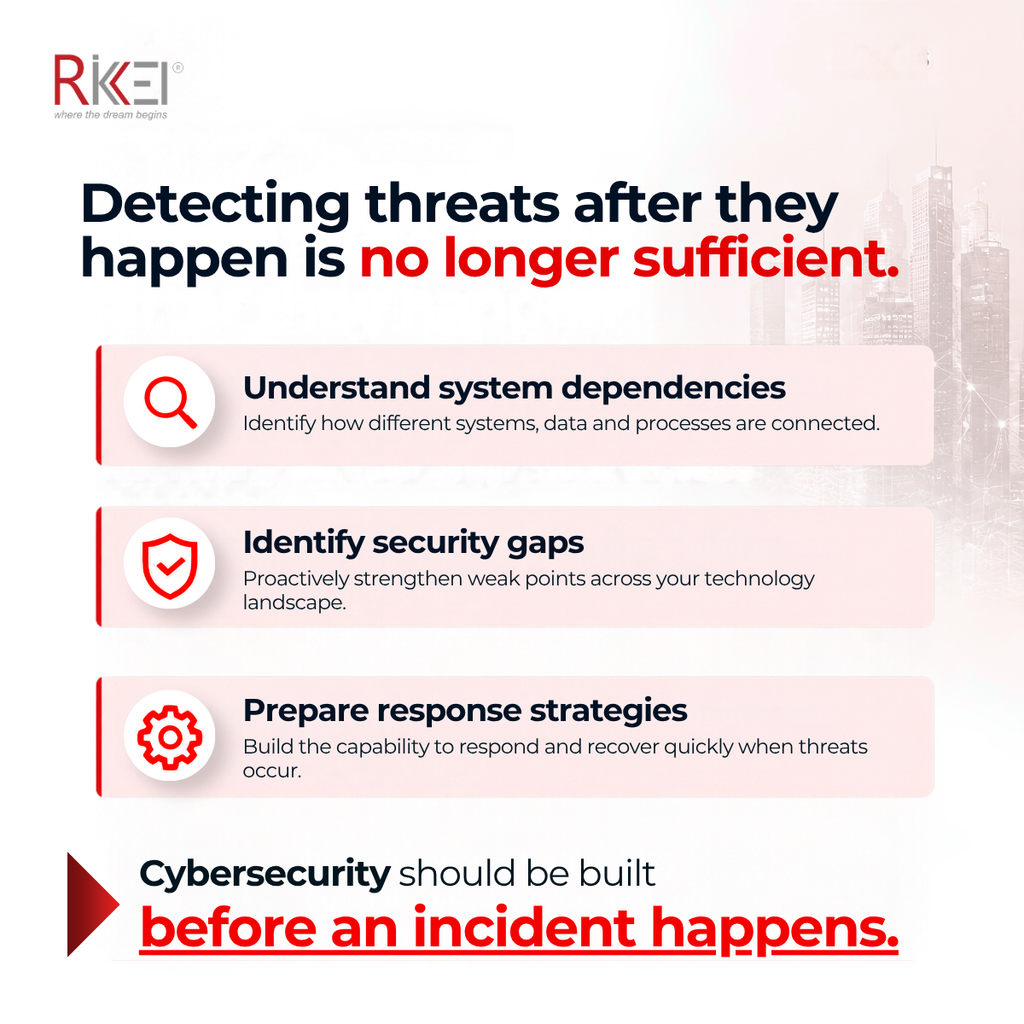
1. Understand critical systems and dependencies
Identify the business activities that must continue and the systems, data and providers supporting them.
Assess how an interruption could affect orders, production, deliveries or customer service. This connects technical priorities with business needs.
2. Identify and address security gaps
Review vulnerabilities, access permissions, configurations and other weaknesses across the technology environment.
Prioritise remediation according to both security risk and business impact. Identifying a gap is only useful when the organisation assigns responsibility and follows through on corrective action.
3. Prepare and practise incident response
Define who makes decisions, who coordinates technical actions and who communicates with employees, customers and partners.
Practise realistic scenarios to identify unclear responsibilities or missing information before an actual incident puts those arrangements under pressure.
Make cybersecurity part of business decision-making
Cybersecurity risk management should involve the people responsible for technology, operations and business priorities.
When organisations introduce a cloud platform, connect a supplier or modernise an application, they should also consider how the change affects security, dependencies and recovery arrangements.
This helps teams make informed decisions about digital growth while preparing for potential disruption.
Continue the conversation with Rikkeisoft
Business continuity depends on understanding what keeps the organisation running and preparing for what could interrupt it.
Through this cybersecurity insights series, Rikkeisoft explores the relationship between digital systems, enterprise risk and operational resilience.
Follow the series for further insights, including lessons from a cyber incident at a major Japanese enterprise.