Still carrying a legacy system nobody has the specs for?仕様書のないレガシーシステムを、そのまま抱え続けていませんか
LegacyForge:LegacyForgeは、
AI generates, humans verify —
modernize without losing the business logic.
AI生成と人間検証で、
業務ロジックを失わずに刷新
Starts without specs. Leaves evidence for everything.仕様書がなくても始められ、すべてに根拠が残る
The three principles behind LegacyForgeLegacyForgeの3つの理念
No big-bang proposal. Phase 1 documents the system; the migration path is chosen afterwards.いきなりの大規模移行は提案せず、まずフェーズ1で文書化 — 移行パスは設計書を手にしてから選択
Visualize first, decide afterまず可視化、判断はその後
AI accelerates analysis and generation; every decision that carries risk passes a human approval gate.解析・生成はAIで加速、リスクを伴う判断は人間の承認ゲートで担保
AI accelerates, people decideAIは加速、判断は人
Every generated method points back to its COBOL paragraph, so QA and auditors can follow the evidence.全メソッドが元のCOBOL段落を指し、QA・監査が根拠を追跡可能
Don't trust us — check it信じてもらうのではなく、確認できる形で
Fast with AI, sure with people —
modernization that comes with its evidence.
AIで速く、人で確かに —
根拠のあるモダナイゼーションを実施
Current specs are documented from the source itself, quickly and without relying on the last engineer who remembers the system. Then, because AI output is never trusted as-is, three mechanisms make every result checkable:熟練者の記憶に頼らず、ソースコードから現行仕様を短期間で文書化 — そのうえで、AIの出力を「そのまま信用しない」ための3つの仕組み
Every method carries @Origin / @Trace, so the rationale for the code can be checked by you, not taken on faith.全メソッドに@Origin / @Trace注釈を付与 — なぜこのコードなのかをご自身で確認可能
Arithmetic, data structures and job flows are handled by deterministic scripts; AI works only on small paragraphs — hallucination is structurally contained.計算・データ構造・ジョブフローは確定的スクリプトで処理、AIは段落単位に限定 — ハルシネーションを構造的に抑制
Services are re-cut by coupling analysis, so the COBOL structure is not transliterated into Java.結合度分析による再設計で、COBOL構造の引き写しを排除
Deterministic processing × AI × human gates —
turning a black box into documentation you can verify.
確定的処理 × AI × 人間検証 によって、
ブラックボックスだった仕様可視化・システム刷新を、ご自身で確認できるものに
One framework, from legacy source to verified Java. レガシーの解析から検証済みJavaまで、ひとつのフレームワークで
estateレガシー
資産
Analyze①コールグラフ
解析
source · JCL · copybooksソース・JCL・コピーブックから
依存関係を抽出
Document②設計書
生成
human-approvedソースコードから設計書を
生成し、人が承認
Architect③アーキテクチャ
設計
target architecture結合度分析から
刷新後の構造を設計
Generate④Java
生成
CI checks注釈付きコード・テストを生成
CIで自動チェック
systemモダン
システム
One shared pipeline, extended per language through adapters — the lists above grow continuously, so ask us about your stack if it is not shown. Middleware such as DB2/IMS, CICS and JCL is assessed per configuration (see FAQ).共通のパイプラインに言語ごとの「アダプタ」を追加して拡張する構造
対象は継続的に拡大中 — 上記にない言語・環境もお問い合わせください
DB2/IMS・CICS・JCL等のミドルウェアは構成により個別確認(FAQ参照)
Phase 1: turn COBOL into design documents in 8–12 weeks.フェーズ1:COBOLを、約8〜12週間で設計書に
Dependency graph, per-program design docs and business rules — generated bottom-up and approved by people.依存関係グラフ・プログラム単位の設計書・業務ルール仕様を、ボトムアップで生成、人が承認
The docs are an asset on their own, even if you never go further.フェーズ2に進まなくても、設計書そのものが資産
Guide: ~100K LOC, 3–4 engineers. Your side: 2–4h per domain, ~15–20 min review per program.目安:100K LOC・3〜4名体制
貴社側の負担は、領域ごと2〜4時間の知識共有と、プログラムごと約15〜20分のレビュー
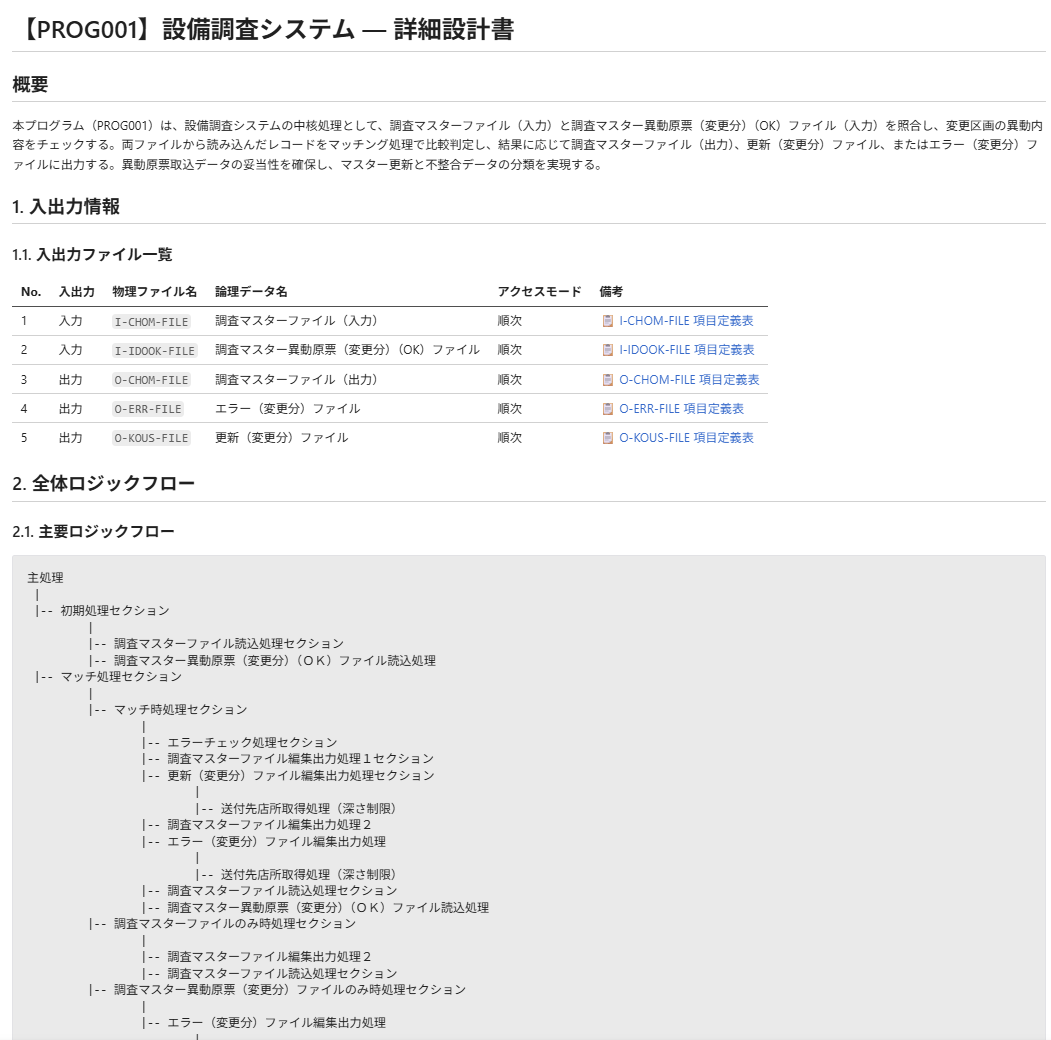 Actual output · detail design doc生成物 · 詳細設計書
Every Java method points back to its COBOL paragraph.Javaの全メソッドが、元のCOBOL段落を指す構造
@Origin / @Trace annotations are mandatory fields; a CI validator flags anything missing or inconsistent.@Origin / @Trace 注釈は必須フィールド — CIのバリデータが欠落・不整合を自動検出
COBOL paragraph → design doc → Java method: three layers, one click apart.COBOL段落 → 設計書 → Javaメソッドの3層対応を、クリック一つで追跡
Evidence your QA team and auditors can inspect — instead of "trust us".品質保証・監査が確認できる根拠を、コードそのものに内蔵
COBOL Paragraph · L150–180COBOL段落 · L150–180
CALCULATE-INTEREST.
  COMPUTE INTEREST =
    PRINCIPAL * RATE
    * DAYS / 365
  ADD INTEREST
    TO BALANCE.
Design Doc · Reviewed by human設計書 · 人がレビュー・承認
Interest Calculation
- Daily interest on principal
  (annual rate × days ÷ 365)
- Result added to balance
✓ Approved: QA review gate利息計算ロジック
・元本に対する日割利息
 (年利 × 日数 ÷ 365)
・算出結果を残高に加算
✓ 人間レビューゲートで承認済
Java Method · CI-validatedJavaメソッド · CIが自動検証
@Origin("CALCULATE-INTEREST")
@Trace("L150-180")
public void calcInterest() {
  var interest = principal
    .multiply(rate)
    .multiply(days)
    .divide(DAYS_365);
  ...
Audit evidence is built into the code itself. Not "trust us" — "verify it yourself." 監査対応・品質保証の根拠を、コードそのものに内蔵 — 「信じてください」ではなく、「ご自身でご確認ください」
Redesigned, not transliterated.「引き写し」ではなく、再設計
Call/PERFORM counts and shared data are measured mechanically; high-coupling groups become domains.CALL/PERFORM回数・データ共有量を機械的に計測し、高結合グループをドメインに集約
AI proposes service boundaries; a senior architect makes the final call against SLA and regulation.サービス境界はAIが提案、規制要件・SLAとの整合はシニアアーキテクトが最終判断
Example below is a Path B configuration; Path A keeps the current structure.下図はパスB(再設計型)の構成例 — パスA(機能等価変換)では現行構造を維持
- Direct calls across domainsドメイン跨ぎの直接呼び出し
- One copybook shared by many programsコピーブックを複数プログラムで共有
- Same tax logic duplicated in several files同一の税計算ロジックが複数ファイルに重複
- REST API contracts only — no direct callsサービス間はREST API契約のみ(直接呼び出しを排除)
- Data structures externalized as API schemasデータ構造はAPIスキーマとして外部化
- Shared calculations consolidated in CommonLibrary共通計算はCommonLibraryに集約
Decide the path with the design docs in hand.移行パスは、設計書を手にしてから判断
No big-bang proposal up front. After Phase 1 you have the evidence to choose.いきなりの大規模移行は提案せず、判断材料が揃ってから選択
Two paths, different goals: leave the platform fast, or rethink the business while you migrate.早期に基盤を脱却するか、移行を機に業務を見直すか — 目的で選ぶ2つのパス
Validate the method on a small investment — before the big one. 大規模投資の前に、小さな投資で方法論を検証
A small entry point, backed by group-scale delivery — expand step by step once the method has proven itself on your code.入口は小さく、実行はグループの実績と体制で — 貴社コードで手法を確認してから、段階的に拡大
Proven on enterprise workloads実プロジェクトで実証済み
Industries we serve 対応業界
Contracts in Japan. Engineering at group scale. 契約・窓口は日本法人、開発はグループ体制で
Provided and contracted by Rikkei Co., Ltd. (Japan); developed by the Rikkei group offshore organization, via Japanese-speaking bridge SEs and PMs — flexible capacity and cost in the delivery phase.提供・契約窓口は株式会社リッケイ(日本法人)、開発はRikkeiグループのオフショア体制 — 日本語対応のブリッジSE・PMを介し、実行フェーズの体制とコストを柔軟に調整

For SI partners: find, propose and deliver together. パートナー企業の皆様へ — 案件発掘から提案・実行まで、ともに
Your client relationship, our AI method, tooling and delivery capacity — starting from a small joint diagnosis, not a big migration pitch.顧客リレーションはパートナー企業が、AI方法論・ツール・開発体制はリッケイが — 大規模移行の提案ではなく、小規模な共同診断から
An entry point for legacy proposals: the diagnosis makes the client’s system problems visible and gives you the angle.既存システムの問題点を可視化し、レガシー提案の入口と切り口を提供
A differentiated story against competitors — AI with traceability, not a black box.トレーサビリティを伴うAI活用で、競合との差別化ストーリーを持てる
Low risk, small start: a scoped diagnosis first, then scale into delivery with the group’s offshore capacity.いきなり大規模移行ではなく小規模診断から — 実行フェーズはグループのオフショア体制で拡張
Free sample generation can be run jointly with your client — use the form below and mention you are a partner.無料サンプル生成はパートナー企業様と共同で実施できます — 下記フォームで「パートナー企業」とお知らせください
Questions we hear most. よくいただくご質問
QCan you handle systems with no design documents, or docs that no longer match the code?設計書が現存しない、または現行コードと乖離している場合でも対応できますか?
設計書はソースコードそのものから再構成するため、「ドキュメントがない・古い」状態を前提としています
QWhich languages and platforms are supported?対象となる言語・環境は?
固定の対応リストではなく随時更新しているため、ご相談時に貴社スタックをお知らせいただければ、その時点の対応状況を確認いたします(DB2/IMS・CICS・JCL等のミドルウェアは構成により個別確認)
QWhat about middleware dependencies — DB2/IMS, CICS, JCL?DB2/IMS・CICS・JCLなどミドルウェア依存部分はどうなりますか?
コールグラフはJCLジョブまで含めて解析し、データアクセスも明示的にマッピングします
変換方針は構成により異なるため、移行の判断前にフェーズ1で評価し、レポートとしてご提示します
QWhat does it cost?費用感を教えてください
目安として、100K LOCのドキュメント化で約8〜12週間・3〜4名体制、フェーズ2の変換はフェーズ1の約3〜4倍の工数です
正式なお見積もりは、ご相談内容やサンプル解析の結果をもとに、実際のコードベースに即してご提示します
QWhat is LegacyForge NOT good at?LegacyForgeが不得意なことはありますか?
画面資産の変換、Assemblerが混在する箇所、特殊なミドルウェアに依存する処理などは、自動化の効果が出にくい領域です
該当箇所は解析の段階で洗い出したうえで、人手で対応する工数として見積もりに含めてご提示します
QWill our source code be used to train AI models?預けたソースコードがAIの学習に使われることはありますか?
お預かりしたコードは貴社プロジェクトの遂行のみに使用し、NDAのもとで管理します
AIモデルの学習には一切利用しません
QWhat exactly does each stage produce?各工程の入出力を具体的に教えてください
②文書化:プログラム単位の詳細設計書 — 入出力・業務ルール・条件分岐・例外
③設計:基本設計書 — 業務領域・モジュール・連携・データ・配置を保守性重視で再設計
④生成:貴社標準に準拠したJava、全メソッドに@Origin/@Trace注釈、単体・結合・E2Eテスト仕様(網羅性はQAが確認)
TraceLink QC(全工程):COBOL段落 → 設計書 → Javaメソッドの対応関係を維持・検証し、最後に本番相当データを新旧で並列実行して差異を解消
各工程の終わりに人間レビューゲートがあります
QHow much effort is Phase 1, and what do you need from us?フェーズ1の工数と、当社側の負担は?
貴社側は、業務ドメイン知識の共有(2〜4時間/領域)、コピーブック・データ辞書のご提供、設計書レビュー・承認(約15〜20分/プログラム)をお願いしています
QWhat is the difference between Path A and Path B in Phase 2?フェーズ2のパスAとパスBの違いは?
パスB(再設計型)はフェーズ1の設計書を新システムの要件定義として活用し、業務プロセスの見直しを含めて刷新するもので、新規開発プロジェクトとして(FP/SP基準で)見積もります
いずれもフェーズ1完了後、設計書を手にした状態で判断します
QIs the generated system cloud-native?生成されるシステムはクラウド対応ですか?
クラウド(AWS・Azure・GCP等)への展開はフェーズ2のオプションで、対象構成に応じて個別に設計します
サービス間はREST API契約、データ構造はAPIスキーマとして外部化されるため、クラウド展開を目標とする場合に対応できる構造になっています
Sample output from a slice of your code — free.
Try it before you decide anything.
貴社コードの一部から、成果物サンプルを無料で生成
ぜひお試しください
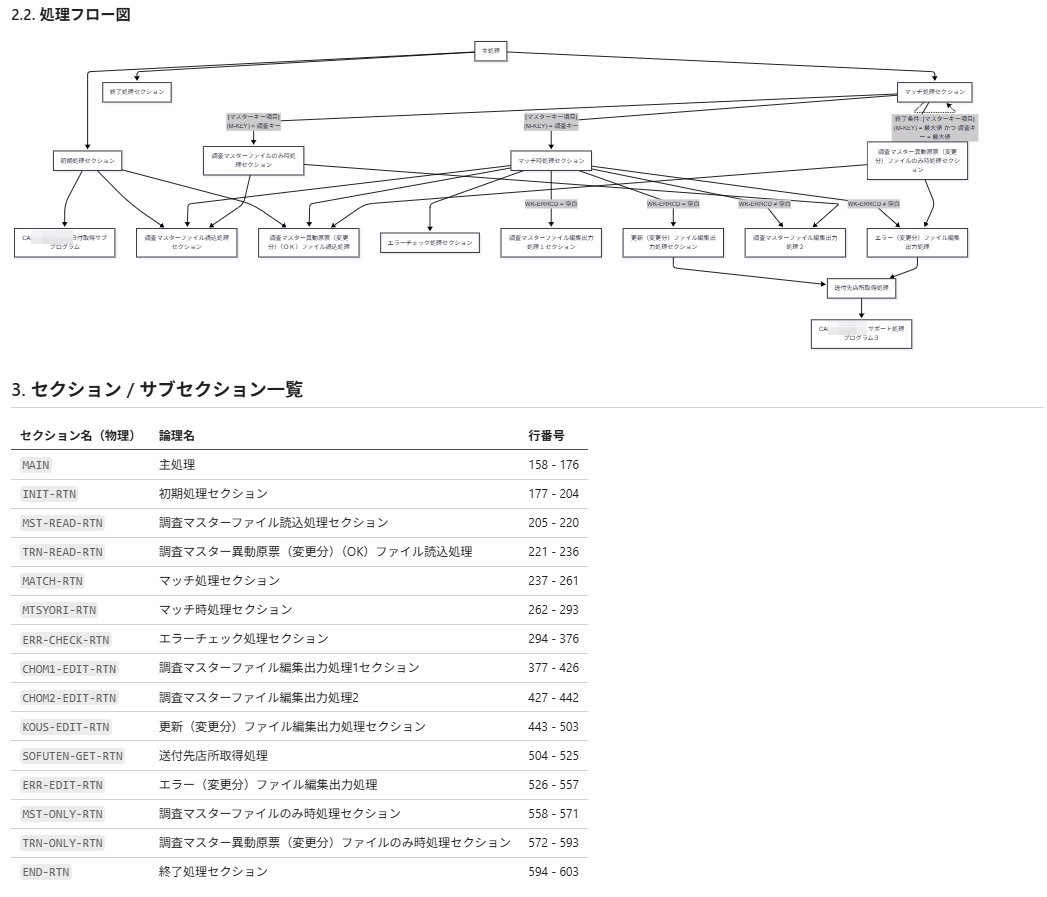
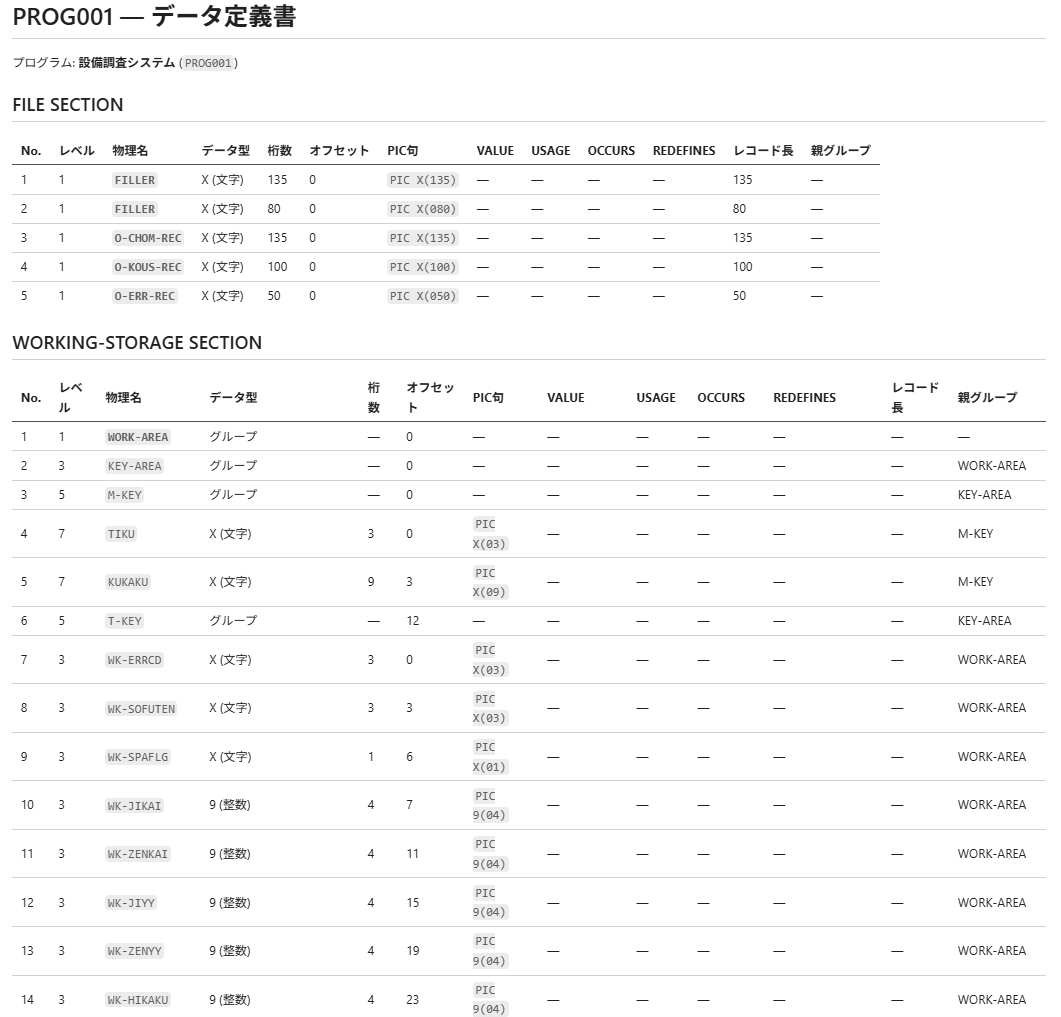
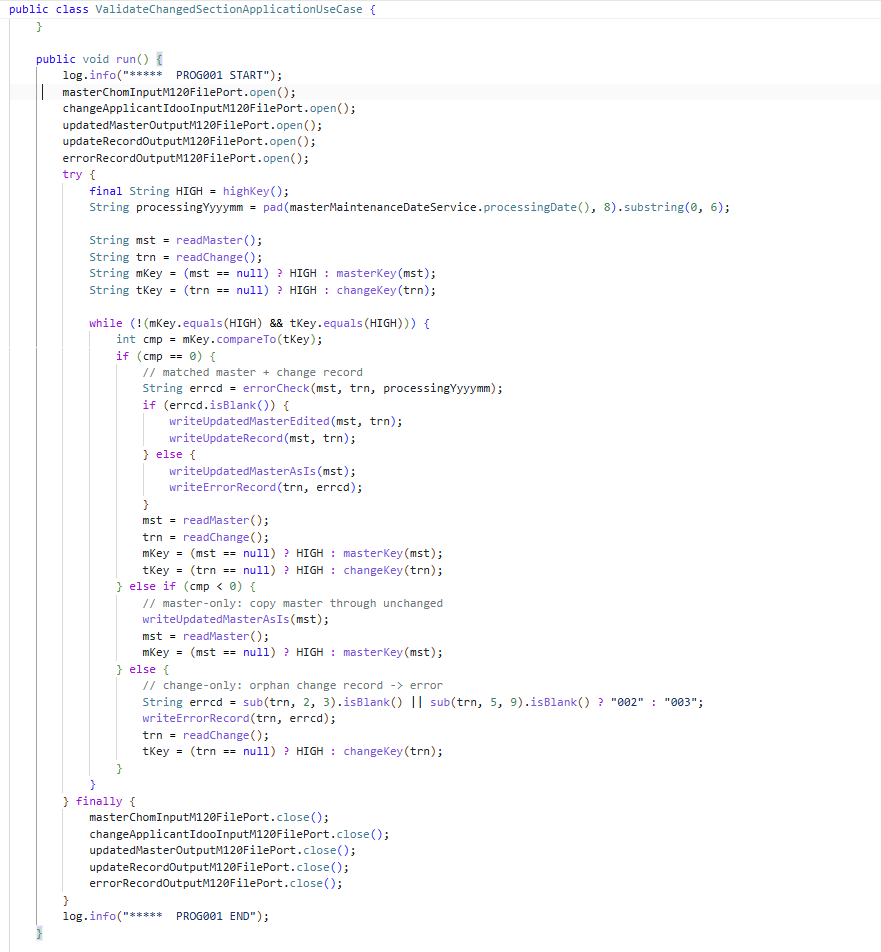
Click any sample to enlarge. Free sample: 1–3 programs plus copybooks, ~5–10 business days.クリックで拡大 — 無償サンプルの目安:プログラム1〜3本+コピーブック、約5〜10営業日
資産全体の提供は不要(構成により個別確認)
AI学習への利用は一切なし